
On This Day - 30th August

Ian McNaught-Davis born
1929

Ian McNaught-Davis born

Ian McNaught-Davis, better known as “Mac”, was born in Wakefield, Yorkshire, on 30 August 1929. Although he became well known as a mountaineer, businessman and television presenter, he is particularly remembered by home-computer enthusiasts for his work with the BBC's Computer Literacy Project during the 1980s.

McNaught-Davis presented several of the BBC's landmark computer programmes, including The Computer Programme, Making the Most of the Micro and Micro Live. His straightforward and enthusiastic presentation style helped introduce a generation of viewers to home computers and explain what computers could do at a time when machines such as the ZX Spectrum, BBC Micro and Commodore 64 were becoming increasingly popular.

Before becoming associated with computing television, McNaught-Davis had established an impressive career in mountaineering. In 1956 he was part of the team that made the first ascent of Muztagh Tower in the Karakoram, and he also appeared on television during the famous 1967 BBC live broadcast of the ascent of the Old Man of Hoy.

McNaught-Davis died in London on 10 February 2014, aged 84. His contribution to the BBC's computer programmes helped make the subject of computing accessible to millions of viewers.
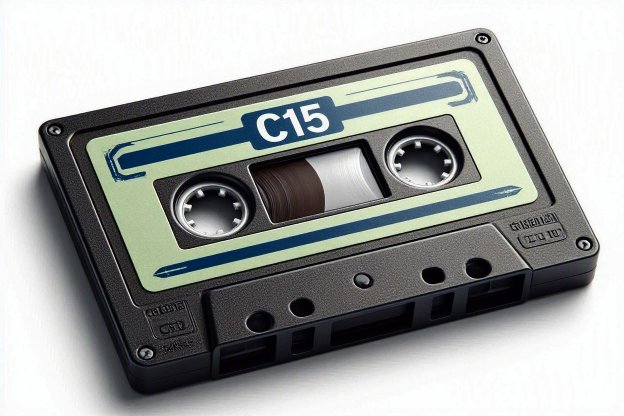
Compact Cassette introduced
1967

Compact Cassette introduced

Philips introduces the Compact Cassette and its first cassette recorder, the EL 3300, at the International Radio Exhibition (Internationale Funkausstellung) in Berlin, Germany.

Developed by a Philips team led by Dutch engineer Lou Ottens, the Compact Cassette placed two reels of magnetic tape inside a small, protected plastic cartridge. The design made recording and playback considerably simpler and more portable than conventional reel-to-reel tape recorders.

Originally conceived primarily for speech recording and dictation, the Compact Cassette would become a worldwide standard for recorded music and portable audio. Philips subsequently licensed the format widely, allowing other manufacturers to produce compatible equipment.

The Compact Cassette also became hugely important to home computing. During the 1970s and 1980s, cassette recorders provided an inexpensive storage medium for personal computers, including the ZX Spectrum, which used ordinary domestic cassette recorders to save and load programs and data.
Source: The Philips Museum — Providing the soundtrack to people's lives; Philips historical archive.
Philips confirms that the Philips Pocket Recorder EL 3300 and accompanying cassette were first presented to the public at the 1963 Internationale Funkausstellung in Berlin. Philips' historical material describes the system as the world's first compact cassette recorder and notes that it was initially conceived for dictation before its potential for music was recognised.

Contemporary historical accounts commonly give 30 August 1963 as the date of the Berlin presentation. BR-KLASSIK records 30 August as the date on which the Compact Cassette was first presented, while The Register also dates the public unveiling to 30 August. Some sources give 28 August 1963, apparently reflecting the opening period of the exhibition, so the precise day should be regarded with a small qualification.

The Compact Cassette later became one of the most important storage media for early home computers. The ZX Spectrum's EAR/MIC cassette interface was specifically designed to work with ordinary domestic cassette recorders, making inexpensive program storage available without requiring a dedicated disk drive.
1984

ZX Spectrum and ZX81 games marathon reaches 50 hours

18-year-old Sean Sullivan of East Yorkshire completes a 50-hour computer-games marathon at the Bridlington Computer Centre. Sullivan and his friend Paddy Bell had begun the attempt at 8pm on Tuesday 28 August, hoping to establish a world record for continuous computer-game playing.

Paddy Bell stopped after 30 hours, but Sullivan continued until 10pm on Thursday 30 August, completing 50 hours of game playing. The machines used during the attempt included both the Sinclair ZX81 and ZX Spectrum, with software supplied by the Bridlington Computer Centre.

Sullivan was permitted a five-minute break during each hour and two independent invigilators were present throughout the attempt. Although the organisers hoped the achievement would qualify for the Guinness Book of Records, Guinness did not at the time recognise continuous computer-game playing as a record category.

The marathon was organised as a sponsored event in aid of the Kingfisher Trust, which was raising money to establish a leisure centre for young people in Bridlington, particularly those who were unemployed. The event provides an interesting contemporary glimpse of the growing popularity of computer games and the role that ZX Spectrum and ZX81 computers were already playing in Britain's emerging home-computer culture.
Source: Sinclair User issue 32, November 1984, “Playing for time”. — 30 August 1984
Contemporary report of an attempted world record for continuous computer-game playing. Sean Sullivan and Paddy Bell began the attempt at 8pm on 28 August 1984 at Bridlington Computer Centre. Bell stopped after 30 hours; Sullivan continued until 10pm on 30 August, completing 50 hours. ZX81 and ZX Spectrum computers were used. The attempt was conducted under independent supervision and sponsored in aid of the Kingfisher Trust.

Also in this month

Other historical information recorded for August.

1982

Dragon 32 launched

In August 1982, Dragon Data released the Dragon 32, a new British home computer designed to compete in the rapidly expanding personal-computer market. Produced by Dragon Data, a division of Welsh toy manufacturer Mettoy, the machine was designed in Cambridge and manufactured in South Wales. It entered the market only a few months after the launch of the Sinclair ZX Spectrum and became one of its most significant British rivals.

The Dragon 32 was built around the Motorola 6809E processor running at approximately 0.9 MHz and came with 32K of RAM, a substantial amount for a home computer of the period. It included Microsoft Extended BASIC in ROM, colour graphics, sound, a full-size 53-key keyboard, two analogue joystick connections, a Centronics printer interface and a composite video output as well as an RF television connection. Its architecture was closely related to the Tandy TRS-80 Color Computer, although the Dragon was adapted for the British market.

The Dragon 32 initially proved popular and demand was strong enough for Dragon Data to expand production. At its peak, the company was producing thousands of machines each week. However, the Dragon faced increasingly strong competition from the ZX Spectrum, Commodore 64 and other home computers, while limitations in its graphics capabilities made it less attractive for some games. Dragon Data subsequently developed the Dragon 64 and a range of peripherals, but the company eventually went into receivership in 1984.
Source: Dragon Data / Centre for Computing History
The Dragon 32 was released in August 1982 by Dragon Data Ltd, a subsidiary of Welsh toy manufacturer Mettoy. It used a Motorola 6809E processor and contained 32K of RAM. The launch price was £199.50.
1982

Commodore 64 launched

Commodore launches the Commodore 64, a colour home computer that would become one of the most successful machines of the 1980s. The C64 was introduced as the successor to the VIC-20 and combined a MOS 6510 processor with 64K of RAM, advanced colour graphics and a dedicated sound chip.

The machine's graphics were provided by the VIC-II chip, which could display 16 colours and hardware sprites, while the revolutionary SID sound chip provided three-channel synthesised audio with programmable filters and envelopes. These capabilities made the C64 particularly attractive to computer-game developers and helped establish it as one of the leading gaming computers of its generation.

With 64K of RAM, the C64 offered substantially more memory than most of its contemporary competitors. Its full-size keyboard, joystick ports, cartridge connector, cassette interface and expansion port made it a versatile home computer for programming, education and entertainment.

The C64 entered a fiercely competitive market that included the Sinclair ZX Spectrum, Atari 400/800, Texas Instruments TI-99/4A and BBC Micro. Commodore's ability to combine impressive graphics and sound with aggressive pricing helped the C64 become a major force in the home-computer market.

The computer remained in production for many years and built an enormous software library. Its games, music and demos became an important part of 1980s computer culture, while its SID chip became particularly influential among electronic musicians and later demoscene programmers.

The Commodore 64 eventually sold many millions of units worldwide and became one of the defining home computers of its era. Its success helped drive the rapid expansion of the home-computer and computer-games industries during the same period in which the ZX Spectrum was becoming dominant in Britain.
Source: Compute!, contemporary 1982 coverage; Personal Computing, 1982; Commodore contemporary documentation; Centre for Computing History Commodore 64 collection.
The Commodore 64 was announced at the Winter Consumer Electronics Show in Las Vegas in January 1982 and entered the market later that year. Commodore's new computer featured a MOS 6510 processor, 64K of RAM, VIC-II graphics and the MOS 6581 SID sound chip. Contemporary advertising and magazine reports document its introduction and specifications. The C64 became one of the most successful home computers of the 1980s and was a major competitor to the Sinclair ZX Spectrum.
Page Revised: 07/09/2026